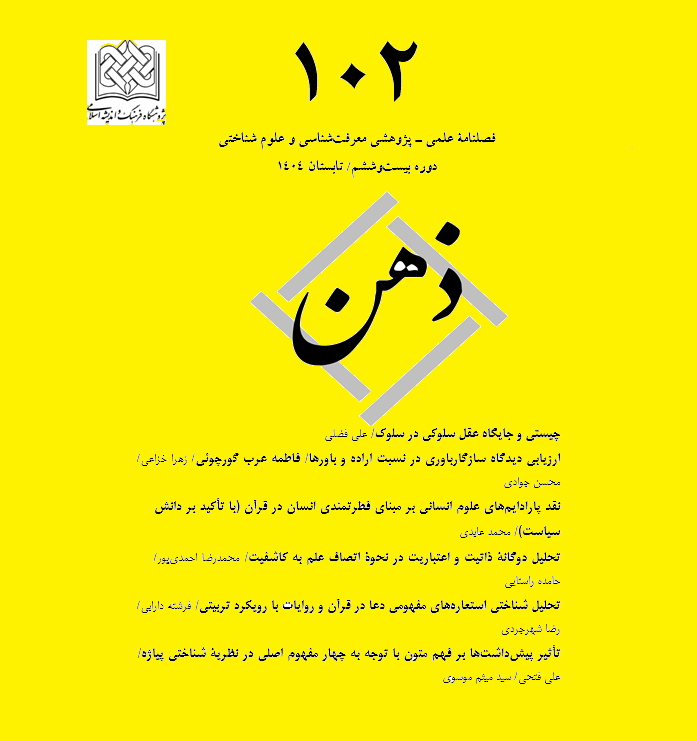
سازگارباوران درباره نقش اراده در ایجاد باورها معتقدند که فقدان کنترل باوری تعمدی، با مکلّف بودن فاعل معرفتی به پذیرش یک باور و یا مسئول بودن وی در برابر باورهایش، سازگار است. ریان از طریق کنترل باوری سازگارانه و هلر با استفاده از مفهوم اراده بازتابی تلاش میکنند تا به این نتیجه برسند که ما نسبت به نگرش-های باوریمان به حد کافی از کنترل ارادی برخوردار هستیم تا در مقابل آنها وظایف و مسئولیتهایی داشته باشیم. در این پژوهش با روش تحلیلی انتقادی درصددیم تا نشان دهیم این رویکرد با توجه به انتقاداتی هم چون مبهم بودن طبیعت معرفتی انسان، ابهام در دو مفهوم اراده بازتابی و کنترل باوری سازگارانه و تردید در کفایت آنها برای داشتن نگرشهای باوری، عدم توجه به نقش محیط در شکلگیری ماهیت معرفتی و ایجاد باورها و پیچیدگی مساله اراده آزاد، نمیتواند سازگاری بین دو مقوله کنترل ارادی و مسئولیت معرفتی را محقق کند.
خزاعی، زهرا و تمدن، فاطمه (1392). «سازگارگرایی پلی بین جبرگرایی و اختیار»، فصلنامهاندیشهدینی، دانشگاه شیراز، 13(1)، صص21-46.
عرب گورچوئی، فاطمه؛ خزاعی، زهرا و جوادی، محسن (1401). «ارادهباوری مستقیم» شناخت، دانشگاه شهید بهشتی، 15(86/1)، صص139-161.
Alston, William (1988). “The Deontological Concepts of Epistemic Justification”, Philosophical Perspectives, Vol. 2, Epistemology, 257-299.
Alston, William P (1985). “Concepts of Epistemic Justification”, The Monist, 68)1(, Knowledge, Justification, and Reliability, Part I, 57-89.
Booth, Anthony Robert (2014). “On some recent moves in defence of doxastic compatibilism”, Synthese, 191, 1867–1880.
Carlos, J. Moya (2006). Moral Responsibility, the Ways ofSkepticism, Routledge.
Feldman, Richard (1988). “Epistemic Obligations”, in James E. Tomberlin (ed.), Philosophical Perspectives, 2: Epistemology, 235–256.
Feldman, Richard (2000). “The Ethics of Belief”, Philosophyand Phenomenological Research, 60)3(, 667–695.
Feldman, Richard (2001). “Voluntary Belief and Epistemic Evaluation”, in Matthias Steup (ed.), Knowledge, Truth, andDuty: Essays on Epistemic Justification, Responsibility, andVirtue, Oxford University Press.
Foley, Richard (1987). The Theory of Epistemic Rationality, Harvard University Press.
Frankfort, Harry (1971). “Freedom of the will and the Concept of a Person”, Journal of Philosophy, 68)1(, 5-20.
Frankfurt, Harry G (1969). “Alternate Possibilities and Moral Responsibility”, The Journal of Philosophy, 66(23), 829–839.
Heller, Mark (2000). “Hobartian voluntarism: Grounding a deontological conceptionof epistemic justification”,PacificPhilosophical Quarterly, 81 (2), 130–141.
Hobart, R. E (1934). “Free Will as Involving Determination and Inconceivable Without It”, Mind, New Series, 43(169), 1-27.
Owens, David (2000). Reasonwithout Freedom: The Problemof Epistemic Normativity, Routledge and Kegan Paul.
Peels, Rik (2017). Responsible Belief, A Theory in Ethics andEpistemology, Oxford University Press.
Ryan, Sharon (2003). “Doxastic Compatibilism and the Ethics of Belief”, Philosophical Studies: An International Journal forPhilosophy in the Analytic Tradition, 114(½), 47-79.
Steup, Matthias (2011). “Belief, voluntariness and intentionality”, Dialectica, 65, 559–576.
Steup, Matthias (2012). “Belief Control and Intentionality”, Synthese2, 145–163.
Williams, Bernard (1973). Deciding to Believe, Problems of theSelf. Cambridge University Press.
Zagzebski L (1996). Virtues of the mind: An inquiry into the nature of virtue and the ethical foundations of knowledge. New York: Cambridge University Press.
عرب گورچوئی, فاطمه, خزاعی, زهرا, و جوادی, محسن. (1404). ارزیابی دیدگاه سازگارباوری در نسبت اراده و باورها. ذهن, 26(102), 31-57. https://doi.org/10.22034/zehn.2025.2042109.2062
MLA
عرب گورچوئی, فاطمه, خزاعی, زهرا, و جوادی, محسن. "ارزیابی دیدگاه سازگارباوری در نسبت اراده و باورها", ذهن, 26, 102, 1404, 31-57. doi: 10.22034/zehn.2025.2042109.2062
HARVARD
عرب گورچوئی فاطمه, خزاعی زهرا, جوادی محسن. (1404). 'ارزیابی دیدگاه سازگارباوری در نسبت اراده و باورها', ذهن, 26(102), pp. 31-57. doi: 10.22034/zehn.2025.2042109.2062
CHICAGO
فاطمه عرب گورچوئی, زهرا خزاعی و محسن جوادی, "ارزیابی دیدگاه سازگارباوری در نسبت اراده و باورها," ذهن, 26 102 (1404): 31-57, doi: 10.22034/zehn.2025.2042109.2062
VANCOUVER
عرب گورچوئی فاطمه, خزاعی زهرا, جوادی محسن. ارزیابی دیدگاه سازگارباوری در نسبت اراده و باورها. ذهن. 1404;26(102):31-57. doi: 10.22034/zehn.2025.2042109.2062